Foreigner

At the gym today, the soundtrack was 100% young white male post-Strokes rock. It was so bland and formulaic, the lyrics so forced and shallow, that when a song by Foreigner — Foreigner! — came on, it seemed fresh, human, real.

Siouxsie and the Banshees, “Painted Bird” (1982)

In the early 1980s, when I was the guitarist in The Nebulas, one of my main inspirations was John McGeoch’s work in Magazine and the Banshees. Not only his playing, which was and still is some of the most inventive in all of pop/rock, but his skill at orchestrating a song — or an entire album — with his wildly varied guitar sounds. He did this to some extent in Magazine, but there he was sharing space with Dave Formula’s excellent keyboard arrangements. The Banshees were a guitar-bass-drums outfit, so John’s layered guitar parts usually featured the hooks; they carried the songs, instrumentally meshing with Severin’s simple but crucial basslines (check out the Severin-McGeoch harmonies opening “Cascade”) and Budgie’s propulsive drumming.

In fact, I consider Ju Ju one of the greatest guitar albums ever, not because of “guitar hero” showoff pyrotechnics, but precisely because of McGeoch’s inventiveness in orchestrating the songs — and his skill at translating his ideas to the fretboard (and incidently, although some of his riffs may seem simple, they are not easy to play well!).

Making the two Banshees albums that came out during his stay with the group, Ju Ju and A Kiss in the Dreamhouse (and a good part of Kaleidoscope as well), McGeoch mined a seemingly bottomless well of sounds, almost exclusively using a simple toolkit: the grey MXR Flanger pedal, a Yamaha rackmount analog delay, and a distortion pedal.

Unlike nearly every other post-punk guitarist (or rock guitarist in general), John had a great fondness for dominant 7th, minor 7th, minor 9th and add 9th chords. He loved the complex sweetness these voicings bring to a song. Check out Magazine’s “Parade,” “Feed the Enemy,” or “Philadelphia”; Siouxsie’s “Happy House,” “Night Shift,” “Spellbound,” “Green Fingers,” etc., etc. (Personal note: I learned these types of chords from Mel Bay and Micky Baker books in the ‘60s, and use them constantly in my playing.… Continue reading

Leonard Cohen

Just finished reading Matters of Vital Interest: A Forty-Year Friendship with Leonard Cohen by Eric Lerner. And it was a beautiful friendship, and thanks to “Old Eric” for sharing it with us. Buddhism isn’t really as mysterious and complicated as it seems; the “enlightenment” people chase is no big deal. Their Roshi couldn’t simply tell them this, but toward the end I think they “got it.”

Leon Russell/Joe Cocker, “Delta Lady” (1969-70)

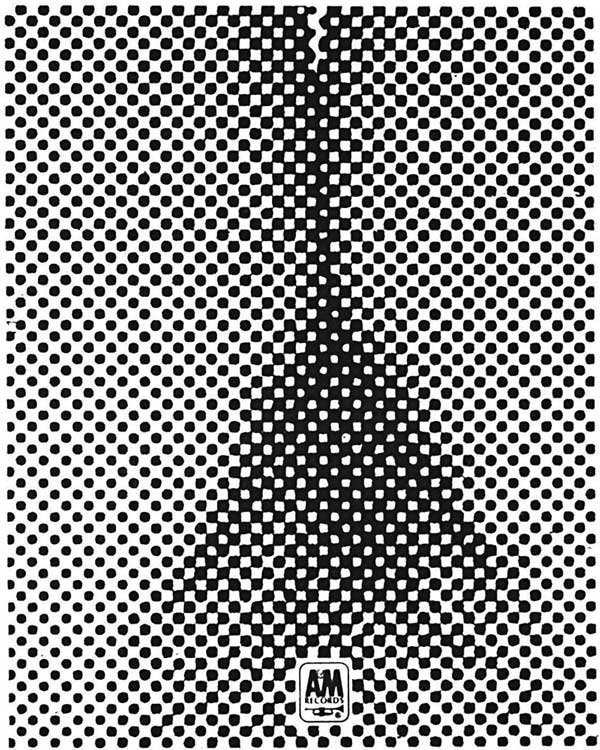
If you had been leafing through Rolling Stone in 1970, this A&M Records ad for the latest Joe Cocker single might’ve caught your eye:
Delta Lady ad 1970

The visual pun stuck in my mind; years later I googled and found the image (it doesn’t seem to be online any more). The song, written and recorded by Leon Russell the year before, fits in two traditions, which can also be thought of as two fantasies:

1. Back to the Garden, which in ’69 would’ve meant Eden/Woodstock, Nature.

Please don’t ask how many times I found you
Standing wet and naked in the garden…

The country vs. the city (countless songs about this at the time) was a big part of the Garden myth:

There are concrete mountains in the city
And pretty city women live inside them
And yet it seems the city scene is lacking
I’m so glad you’re waiting for me in the country

2. You’re far away; I’m missing you (“I’m over here in England*/And I’m thinking of you love”). Oh what the heck, why beat around the bush: “You’re not here, and I’m horny.” “Now I’ve found you” = I have your image in my mind. Could be a long-distance call we’re listening in on:

And I whisper sighs to satisfy your longing
For the warmth and tender shelter of my body…

“Please don’t ask how many times I found you” seems like an odd question for the singer to ask his love, unless you think of the whole song as the fantasies of an absent lover. [Biographical “evidence” backs this up, as Rita Coolidge, the real Delta Lady, says she was never actually naked in Leon Russell’s garden.]

Other faraway-lover fantasy songs: Billie Myers’ “Kiss the Rain” (“If your lips feel lonely and thirsty… If you feel you can’t wait till morning/Kiss the rain… whenever you need me”); Roy Orbison’s “All I Can Do Is Dream You” (“I’ve been away from you for so long… But all I can do is dream you… I close my eyes/I don’t even have to try/It comes so easily”); The Band’s “Chest Fever” — which turns the whole thing into an off-color joke (“It’s long, long when she’s gone/I get weary holding on”).… Continue reading

Twyla Tharp

Someone has done it before? Honey, it’s all been done before. Nothing’s really original. Not Homer or Shakespeare, and certainly not you. Get over yourself.
Twyla Tharp

Brian Eno

Stop thinking about artworks as objects, and start thinking about them as triggers for experiences.
Brian Eno

MOTU DP10

Keeping a close eye on the soon-to-be-available Digital Performer 10 upgrade from MOTU. I’ve kept my copy of DP upgraded (through most versions) since DP3, I think. Like the program, like the company (hey — they’re local!), and I think it’s an excellent platform for mixing. But for composing, I really need to have the freedom and speed you get with MIDI regions — which DP lacks. Maybe the new Clips are a harbinger of Object-Oriented MIDI in the timeline? Peter Kirn at CDM talks about DP 10’s new features in the context of the DAW universe: DP10 adds clip launching, improved audio editing to MOTU’s DAW

Bees Deluxe

We had dinner at the Gardner Ale House last night, and enjoyed music by Bees Deluxe. “Acid Blues” they call it, but it’s not crazy — understated if anything — but certainly not the same old boring blues you hear all too often. Loved Conrad Warre’s bare-fingers guitar work (PRS into a little Fender, with dollops of Uni-Vibe). Digging their latest LP, Voice of Dog, on Spotify.

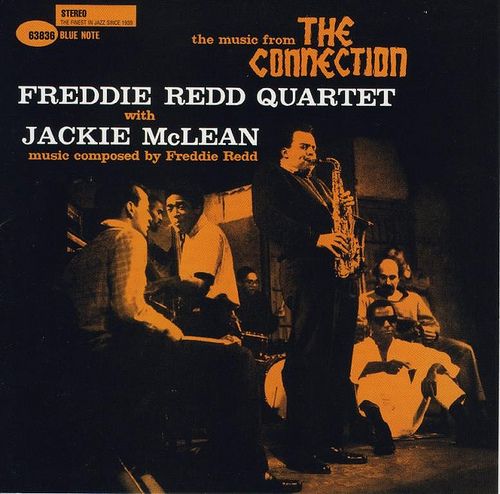
The Connection

The Connection Blue Note LP cover

Reading Birth of the Cool: Beat, Bebop, and the American Avant-Garde by Lewis MacAdams. I want to see the 1961 film version of The Connection (directed by Shirley Clarke), Jack Gelber’s play originally staged in 1959 by Judith Malina and Julian Beck’s Living Theatre.

Dionne Warwick, “(Theme from) Valley of the Dolls” (1968)

There’s an art to making a catchy pop song in an odd time signature — “odd” meaning something other than the vastly popular 4/4 and 3/4 (“waltz time”) meters. Despite the overwhelming popularity of those two meters, if a great song has time changes that flow naturally, no reason it can’t top the charts.

Dave Brubeck and Paul Desmond’s “Take Five” (1959) was the pioneer, a huge hit in 5/4 time (counted “ONE-two-three-ONE two” — listen for the kick drum on those “ones”).

The Beatles’ “Strawberry Fields Forever” shifts from 4/4 to 3/4 (or 6/8) in the turnaround (the phrase “Strawberry Fields Forever”), with a possible bar of 7 thrown in…

Redbone’s “Witch Queen of New Orleans” (1971) is in 4/4, but adds in a bar of 2/4 — that little hiccup — after every other measure in the chorus:

Marie Marie la voodoo veau
She’ll put a spell on you (hiccup)
Marie Marie…

The Beatles went crazy in “Happiness Is a Warm Gun” — you can hear 4/4, 3/4, 5/4, maybe 9/8, 10/8, — all over the place. But the time changes are abrupt and jarring — they’re meant to be — and anyway, the song wasn’t a hit single.

In Dionne Warwick’s “I Say a Little Prayer,” Burt Bacharach sneaks in a 2/2 bar in the middle of the 4/4 verse, and a 3/4 bar in the middle of the chorus. The b-side of that record is “(Theme from) Valley of the Dolls,” which sounds Bacharachian, but was written by the husband-and-wife team of André and Dory Previn. Both songs were million-sellers; together they’re one of pop music’s biggest-selling double-sided hits.

I’ve seen musicologist types claim “Valley” is “in 17/4” — so what? Musicians count time in chunks that feel right and make sense. And there are a lot of chunks in this song!… Continue reading